No Limits, All Flavor: How to Build the Perfect Bowl Around Any Food Sensitivity

Photo: Shixart1985, CC BY 2.0, via Wikimedia Commons
Food sensitivities are more common than ever — and if you're navigating one (or more), you already know the frustration of staring at a menu or a recipe and doing mental gymnastics just to figure out what you can actually eat. The good news? Bowls are one of the most naturally adaptable meal formats out there. With the right framework, a little know-how, and some smart swaps, you can build a bowl that's every bit as satisfying and nutritious as anything you'd find at a trendy fast-casual spot.
At FitBowl, we're big believers that eating well shouldn't feel like a punishment — regardless of your dietary situation. So let's break this down in a way that's actually useful.
Understanding the Landscape: Who's Managing What
According to estimates from the American College of Allergy, Asthma & Immunology, food allergies affect roughly 26 million adults in the US. Add in the millions more dealing with non-allergic food sensitivities — gluten intolerance, lactose sensitivity, FODMAP issues, and beyond — and you've got a huge portion of the population trying to navigate meals with real constraints.
The challenge isn't just about avoiding certain ingredients. It's about making sure you're still hitting your nutritional targets, especially if you're active and trying to support fitness goals alongside managing your sensitivities. That's where intentional bowl-building comes in.
The FitBowl Customizable Framework
Every great bowl starts with the same basic architecture. Think of it like a template you can fill in with whatever works for your body:
1. Your Base — the foundation of carbs and fiber 2. Your Protein — the muscle-supporting centerpiece 3. Your Vegetables — color, micronutrients, and volume 4. Your Fat Source — satiety and nutrient absorption 5. Your Flavor Layer — sauces, dressings, and toppings that make it actually crave-worthy
The magic is that every single layer has multiple options — and at least one of those options works for nearly every dietary restriction out there. Let's go layer by layer.
Building Gluten-Free Bowls That Don't Feel Like a Compromise
Gluten-free eating has gotten a bad reputation for being bland or nutritionally incomplete, but that's only true when you're leaning on processed substitutes. Real, whole-food bowl ingredients are naturally gluten-free and incredibly satisfying.
Gluten-free base options: Rice (white, brown, or wild), quinoa, millet, buckwheat, polenta, cauliflower rice, or roasted sweet potato chunks.
Watch out for: Soy sauce (use tamari or coconut aminos instead), pre-marinated proteins (often contain wheat), and certain salad dressings with hidden gluten additives.
Flavor tip from a registered dietitian: "A lot of my gluten-free clients miss the umami depth they used to get from certain sauces. Miso paste, nutritional yeast, and coconut aminos are your new best friends — they add that savory richness without any gluten exposure."
Sample Gluten-Free Bowl: The Teriyaki-Free Teriyaki
- Brown rice base
- Grilled salmon glazed with coconut aminos and ginger
- Edamame and shredded purple cabbage
- Sesame oil drizzle, sesame seeds, sliced scallions
- Pickled cucumber on the side
Dairy-Free Bowls: Creaminess Without the Cow
One of the biggest misconceptions about dairy-free eating is that you have to give up creamy, indulgent textures. You absolutely don't. The plant-based world has a whole arsenal of rich, satisfying alternatives that perform beautifully in bowls.
Dairy-free fat and creaminess sources: Avocado, tahini, cashew cream, coconut yogurt, hummus, and full-fat coconut milk-based dressings.
Hidden dairy landmines to dodge: Caesar dressings, store-bought pesto, certain protein powders, and "butter-washed" grain preparations.
Real talk from a fitness enthusiast: "I was dairy-free for about six months before I realized I could still get that creamy bowl experience — I just had to think differently. Now I use avocado as my creamy base and tahini as my dressing, and honestly? I don't miss the cheese."
Sample Dairy-Free Bowl: The Green Goddess Recovery
- Farro base
- Sliced grilled chicken breast
- Roasted asparagus and cherry tomatoes
- Thick avocado slices
- Dairy-free green goddess dressing (blended avocado, lemon, herbs, olive oil)
- Pumpkin seeds for crunch
Nut Allergy Bowls: Safe, Satisfying, and Still Delicious
Nut allergies require vigilance because nuts show up in surprising places — trail mix toppings, pesto, certain protein bars mixed into smoothie bowls, and even some restaurant-made dressings. But building a nut-free bowl is totally doable with a few reliable swaps.
Safe crunch and fat alternatives: Sunflower seeds, pumpkin seeds (pepitas), hemp seeds, sesame seeds, toasted chickpeas, and roasted corn.
Nut-free dressings: Tahini (sesame-based, not a tree nut), olive oil and lemon, balsamic vinaigrette, miso dressing, and citrus-herb vinaigrettes.
Key tip: Always check labels on pre-made dressings and toppings. Even products that don't contain nuts may have cross-contamination warnings if you're managing a severe allergy.
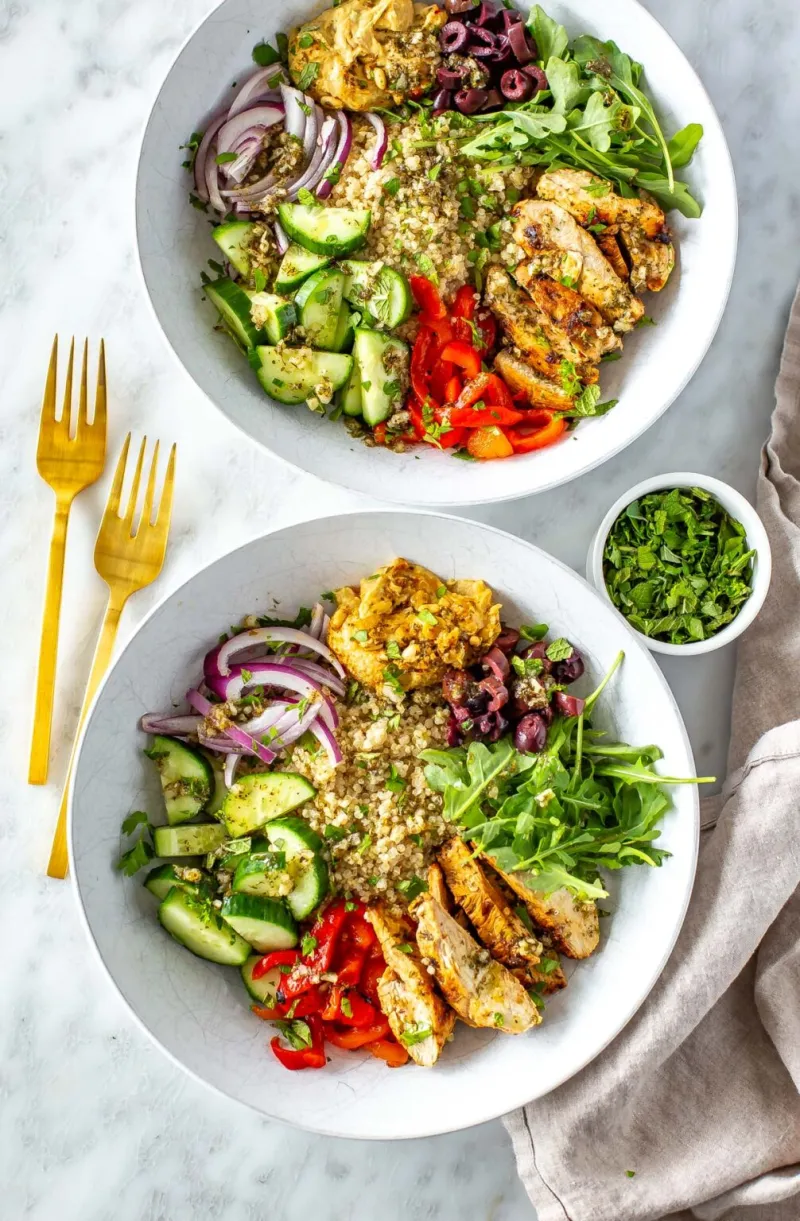
Sample Nut-Free Bowl: The Mediterranean Crunch
- Quinoa base
- Grilled shrimp
- Cucumber, kalamata olives, sun-dried tomatoes, roasted red peppers
- Tahini-lemon dressing
- Toasted pepitas for crunch
- Fresh parsley and a squeeze of lemon
Low-FODMAP Bowls: Gut-Friendly Without Going Hungry
The low-FODMAP diet is one of the more complex dietary frameworks to navigate because it restricts specific fermentable carbohydrates that can trigger digestive symptoms — and many of those are found in otherwise healthy foods like garlic, onions, beans, and certain fruits. But low-FODMAP bowl-building is very much achievable.
Low-FODMAP base options: White rice, rice noodles, oats (in moderation), and canned and rinsed lentils in small portions.
Low-FODMAP proteins: Chicken, turkey, beef, eggs, firm tofu, shrimp — most plain proteins are FODMAP-friendly.
Low-FODMAP vegetables: Spinach, carrots, zucchini, bell peppers, bok choy, green beans, and eggplant.
Flavor without the triggers: Garlic-infused olive oil (the flavor, not the actual garlic), fresh ginger, chives, lemon, and herbs like basil and parsley.
Nutritionist insight: "Low-FODMAP eating gets easier once you stop thinking about what you can't have and start building a solid repertoire of what works for you. Bowls are perfect for this — you're in total control of every component."
Sample Low-FODMAP Bowl: The Gentle Recovery
- White rice base
- Ground turkey seasoned with cumin and paprika
- Sautéed zucchini and bell peppers (cooked in garlic-infused olive oil)
- Shredded carrots
- Fresh lime juice and chopped chives
- A few leaves of fresh basil
Substitution Quick-Reference Chart
Here's a fast cheat sheet for the most common swaps:
| Original Ingredient | Gluten-Free Swap | Dairy-Free Swap | Nut-Free Swap | Low-FODMAP Swap |
|---|---|---|---|---|
| Soy sauce | Tamari or coconut aminos | Same | Same | Same (small amounts) |
| Wheat pasta | Rice noodles or quinoa | Same | Same | Rice noodles |
| Yogurt dressing | Same (check labels) | Coconut yogurt | Same | Lactose-free yogurt |
| Almond butter | Sunflower seed butter | Same | Sunflower seed butter | Peanut butter (small amounts) |
| Garlic | Garlic-infused oil | Same | Same | Garlic-infused oil only |
| Regular croutons | Toasted GF bread cubes | Same | Pepitas | Toasted GF bread cubes |
The Bigger Picture: Nutrition Completeness Matters
One thing worth flagging: when you eliminate entire food groups, it's worth checking in on whether you're still hitting key nutritional targets. For example, dairy-free eaters should pay attention to calcium and vitamin D. Those avoiding gluten need to watch B vitamins and fiber. And anyone on a low-FODMAP diet long-term should work with a dietitian to ensure they're not inadvertently cutting too many nutrient-dense foods.
Bowls are actually a great tool for this — because you're intentionally layering proteins, vegetables, complex carbs, and healthy fats, you naturally build in more nutritional diversity than a standard sandwich or pasta dish.
You Deserve a Bowl That Works for You
Managing a food sensitivity doesn't mean resigning yourself to boring meals or skipping the foods you love. It means learning to work with your body — and honestly, that process often leads people to discover ingredients and flavor combinations they never would have tried otherwise.
The FitBowl philosophy is simple: every body deserves nourishment that tastes good and feels good. Your dietary restrictions are just the starting point. What you build from there? That's where the fun begins.