Hot, Cold, or Room Temp? The Science Behind Bowl Temperature and What It Means for Your Body
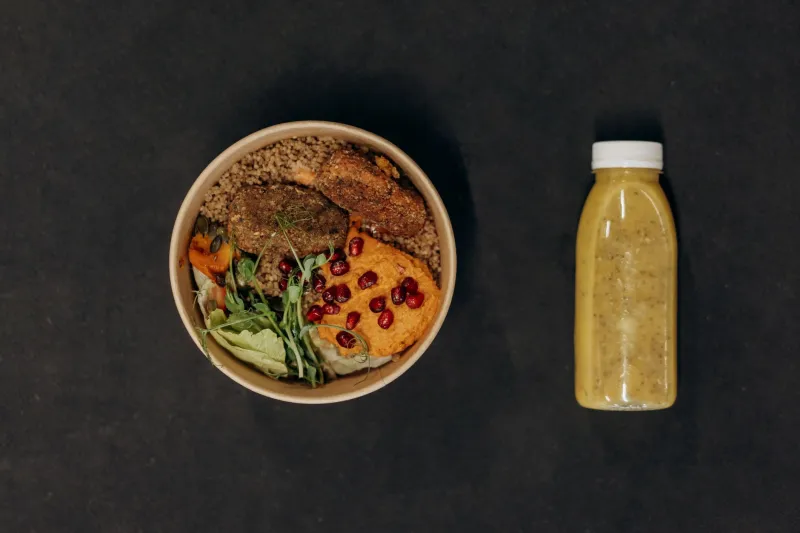
Meal prep culture has a cold bowl obsession. You build your bowls on Sunday, stack them in the fridge, and pull one out before the gym or after a run like it's a badge of discipline. Cold bowl, clean eating, done. Except the temperature of what you're eating isn't just a comfort preference—it's actually influencing how efficiently your body breaks things down and absorbs what you worked hard to put in there.
This isn't about blowing up your meal prep routine. It's about understanding a layer of nutrition science that most fitness content completely glosses over, so you can make smarter decisions about when temperature actually matters.
Why Temperature and Digestion Are More Connected Than You Think
Your digestive system is essentially a warm, enzyme-rich environment that runs at around 98.6°F. Everything you eat enters that environment and gets processed through a cascade of biological reactions—most of which are temperature-sensitive.
Enzymes, the proteins that break down your food into usable components, are highly dependent on operating within a specific temperature range. When you eat something very cold, your body has to work harder to bring that food up to a temperature where digestion can proceed efficiently. That's not catastrophic, but it does mean your stomach is spending extra energy on thermal regulation rather than purely on breaking down nutrients.
For most healthy people, this is a minor inconvenience. But if your digestion is already under stress—from a hard training block, poor sleep, or chronic gut issues—that extra load can slow the whole process down and leave nutrients less available for absorption.
The Enzyme Argument: Where Cold Bowls Can Actually Backfire
Here's something worth knowing: certain raw, whole foods contain their own natural enzymes that assist in digestion. Think sprouted grains, raw vegetables, fermented toppings. These enzymes are active at room temperature but can become sluggish or partially deactivated at refrigerator temps around 35–40°F.
So when you pull a bowl loaded with raw cabbage, sprouted lentils, and a kimchi topping straight from the fridge and eat it cold, you may actually be dampening some of the enzymatic activity that was supposed to help you digest it. Letting that same bowl sit at room temperature for 20–30 minutes before eating is a small habit that could meaningfully change how your gut handles it.
On the flip side, heat has its own trade-offs. Cooking vegetables above certain temperatures—particularly prolonged high heat—can degrade heat-sensitive vitamins like vitamin C and folate. So a piping hot bowl that's been sitting on the stove isn't automatically winning either.
Nutrient Bioavailability: The Temperature Plot Twist
This is where things get genuinely interesting. Temperature doesn't just affect how fast you digest something—it affects which nutrients your body can actually pull out of the food.
Lycopene, the antioxidant found in tomatoes, actually becomes more bioavailable when tomatoes are cooked. Beta-carotene in carrots and sweet potatoes is better absorbed after light cooking because heat breaks down the plant cell walls that would otherwise trap it. If you're eating those ingredients cold in a raw state, you're leaving some of that nutritional value on the table.
But flip the script: resistant starch—the kind that feeds your gut microbiome and helps regulate blood sugar—actually increases when starchy foods like rice, potatoes, and legumes are cooked and then cooled. This is why a cold rice bowl from the fridge has a slightly different metabolic profile than a freshly cooked one. The cooled starch behaves more like fiber in your gut, which is genuinely beneficial for gut health and blood glucose management.
So cold bowls aren't bad. They're just different. And understanding those differences lets you build and time your bowls with more intention.
What Warm Bowls Do for Digestion That Cold Ones Can't
Warm food does something cold food simply doesn't: it arrives in your digestive tract closer to the temperature your gut is already operating at. For people with sensitive digestion, irritable bowel tendencies, or anyone deep into a high-volume training phase, this can make a real difference in how comfortable and efficient digestion feels.
Warm broths, soups, and grain bowls tend to move through the stomach more smoothly, and the heat itself can help relax the smooth muscle of the GI tract. Traditional medicine systems—from Ayurveda to Traditional Chinese Medicine—have emphasized warm foods for digestive health for centuries. Modern research doesn't fully validate every claim, but the core idea that warmth supports digestive ease has physiological backing.
For athletes specifically, this matters post-workout. Your gut is already in a somewhat compromised state after intense exercise—blood flow has been diverted to working muscles, and digestion takes a temporary backseat. A warm bowl with easy-to-digest ingredients may actually be absorbed more efficiently in that window than a dense cold bowl pulled straight from the fridge.
The Room Temperature Middle Ground
If you're a dedicated meal prepper who isn't about to start reheating every bowl, there's a practical middle path worth considering. Letting your prepped bowl sit out for 20–30 minutes before eating accomplishes a few things at once:
- Enzymatic activity in raw ingredients has a chance to ramp back up
- Your digestive system doesn't have to work as hard to warm the food
- Certain fat-soluble nutrients become slightly more accessible as the bowl approaches room temperature
This isn't a dramatic intervention—it's a small shift that stacks in your favor without requiring you to rebuild your entire prep system.
Building Smarter Bowls for Every Temperature Scenario
Here's a practical framework based on what we know:
Cold bowls work best when: You're including ingredients with resistant starch benefits (cooked and cooled rice, lentils, chickpeas), your digestion is running smoothly, and you're not in a post-workout recovery window.
Warm bowls work best when: You're eating post-workout, your gut is under stress, or your bowl is heavy in fat-soluble nutrients like beta-carotene, lycopene, or vitamin K that benefit from heat-assisted absorption.
Room temperature is your flex option: Great for raw ingredient-heavy bowls where you want those natural enzymes working, and ideal for anyone who runs cold or tends to feel sluggish after refrigerator-temperature meals.
The Takeaway
The cold bowl isn't the enemy, and neither is the hot one. Temperature is just another variable—like ingredient pairing or meal timing—that you can use to your advantage once you understand what's actually happening inside your gut.
The fitness world loves a binary: cold is disciplined, hot is indulgent. But your body doesn't operate in binaries. It operates in context. And the more context you give your meals—the right temperature for the right ingredients at the right moment—the more efficiently your body can do what you're training it to do.
Next time you reach for that fridge bowl, take 20 minutes. Let it breathe. Your gut will notice.