Does It Matter If You Eat From a Bowl? The Unexpected Science of How Your Vessel Shapes Digestion
Your Brain Eats Before Your Stomach Does
Before a single bite hits your digestive tract, your brain has already started making decisions — about how much you'll eat, how satisfied you'll feel, and how quickly your body will start processing what's coming. And one of the inputs it's using? The vessel your food is sitting in.
This isn't pseudoscience. It's a growing area of research in sensory-specific satiety and food psychology, and the findings are genuinely surprising for anyone who's been treating their bowl, plate, and blender cup as interchangeable.
They're not.
The Bowl Effect: Containment and Portion Perception
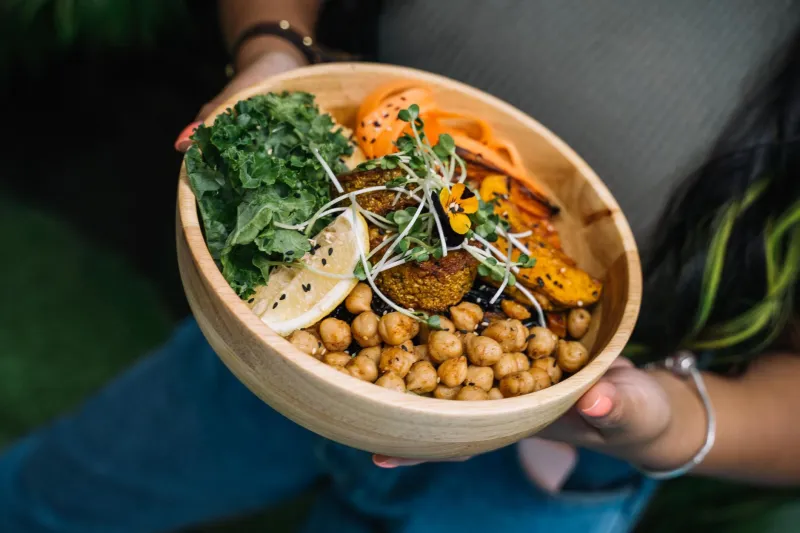
Bowls do something psychologically interesting: they make portions look larger. When food is piled into a contained, curved vessel, the visual density signals abundance in a way that a spread-out plate doesn't quite replicate. Research out of food behavior labs has repeatedly shown that people perceive the same quantity of food as more filling when it's served in a bowl versus a wide, flat plate.
For fitness-conscious eaters trying to manage calorie intake without constantly feeling deprived, this is actually a meaningful advantage. The perception of fullness starts before digestion does — and if your brain gets the "this is a substantial meal" signal early, it cooperates with satiety hormones like leptin and GLP-1 more effectively.
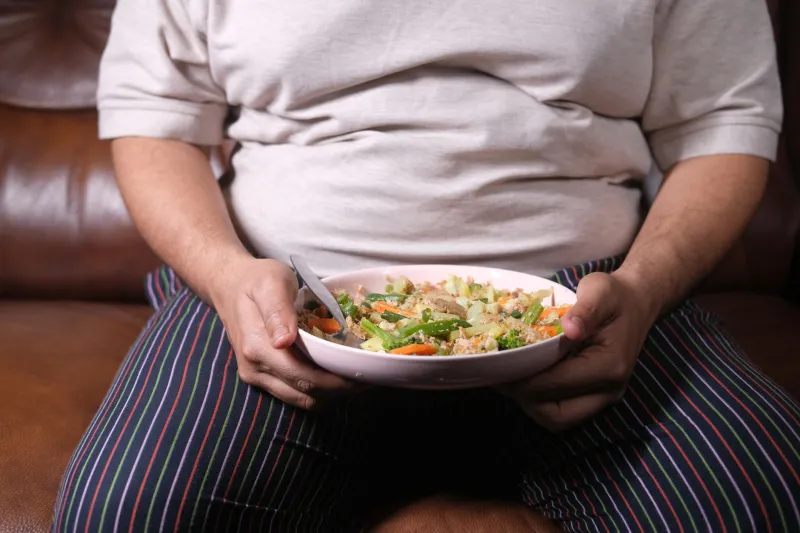
There's also a slowing effect. Food in a bowl tends to be eaten more slowly than food on a plate, partly because scooping from a curved surface requires more deliberate movement than cutting and sliding from a flat one. Slower eating gives your gut more time to send satiety signals to your brain — the window is roughly 15 to 20 minutes — which means you're more likely to stop eating when you're actually full rather than when you've overshot.
Plates: When Spread Actually Serves You
Plates aren't nutritionally inferior — they just work differently, and in some contexts, better.
When the goal is to eat a wide variety of distinct foods without them blending together (literally or perceptually), a plate wins. Think: a piece of grilled salmon, a separate serving of roasted vegetables, and a scoop of wild rice sitting in their own zones. The separation keeps flavors distinct, which extends what researchers call sensory-specific satiety — your brain stays interested longer because each component offers a fresh experience.
For athletes eating large-volume meals before a competition or a long training block, plates also allow for a more relaxed eating pace. There's less visual pressure to "clean the bowl," and the visual separation of macronutrients can help with deliberate portioning — especially useful if you're tracking intake for a specific performance goal.
Plates also tend to cool food faster, which isn't always relevant but matters if you're eating something where temperature affects texture and enjoyment (a perfectly seared piece of fish, for instance, loses a lot on a cold plate).
Smoothies: The Format That Bypasses Your Satiety System
This is where things get genuinely important for anyone who's replaced a meal with a blended drink and wondered why they were hungry an hour later.
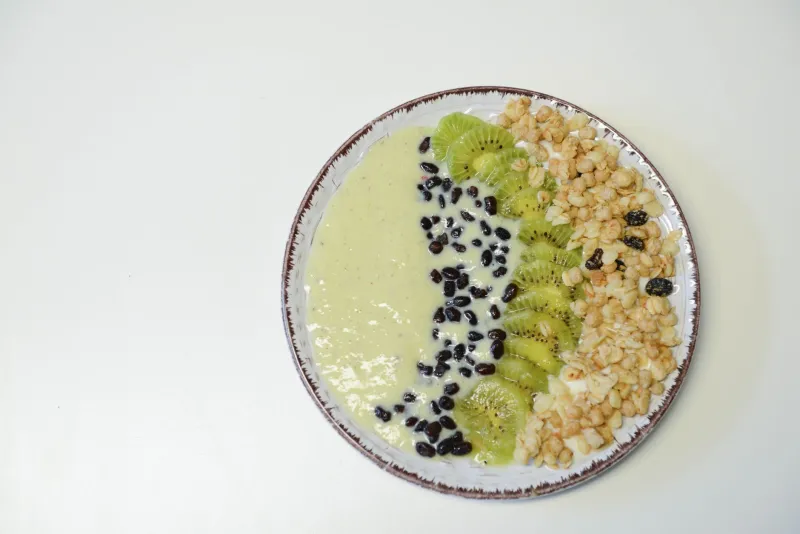
Liquid food moves through the stomach significantly faster than solid food. The mechanical process of chewing triggers digestive enzyme production and signals the gut to prepare for incoming nutrients — when you bypass chewing entirely, you also compress that signaling window. Hormones like cholecystokinin (CCK), which is released in response to the physical presence of food in the stomach and small intestine, are released more slowly and in lower quantities when food is liquefied.
Additionally, blending breaks down cell walls and fiber structures that would otherwise slow absorption. A smoothie made from the exact same ingredients as a whole-food bowl will typically spike blood glucose faster and produce a shorter satiety window — even if the macros are identical on paper.
This doesn't make smoothies bad. Pre-workout, when you need fast fuel without digestive burden, a liquid format is genuinely superior. Post-workout, when rapid nutrient delivery to recovering muscle tissue is the priority, a smoothie or shake makes sense. But as a replacement for a satisfying, performance-sustaining meal? The bowl format has a real physiological edge.
The Hormone Conversation Nobody's Having
Beyond satiety hormones, the eating vessel influences something subtler: the cephalic phase digestive response. This is the set of physiological changes — saliva production, stomach acid secretion, insulin release — that your body initiates in anticipation of eating, triggered by sight, smell, and the ritual of preparing to eat.
A beautifully assembled bowl engages this response more fully than a smoothie gulped on the way out the door. That preparation phase matters for digestion efficiency. When your body has time to prepare, it processes food more completely and absorbs nutrients more effectively. The format of your meal is, in a real sense, part of the meal itself.
So When Should You Use Each Format?
Here's a practical framework:
Use a bowl when: You want maximum satiety from a moderate-calorie meal. You're eating a recovery or daily nutrition meal. You have 20+ minutes to eat and want to support healthy digestion. You're building a meal with multiple components that benefit from being eaten together.
Use a plate when: You're eating a high-volume meal with multiple distinct components. You want to maintain clear visual separation of food groups for portioning purposes. You're eating with others and the social experience matters.
Use a smoothie or liquid format when: You need pre-workout fuel within 60 to 90 minutes of training. You're supplementing (not replacing) whole food intake. You're dealing with appetite suppression and need calories without the volume.
The Takeaway
The bowl format isn't just an aesthetic choice — it's a functional one, and for most fitness-focused meals, it earns its place as the default. But understanding why it works, and when other formats serve you better, gives you a real tool for shaping how your body responds to the food you're already eating.