Eat With the Clock: How Your Body's Daily Rhythm Should Shape Every Bowl You Build

Most fitness-focused eaters spend a lot of mental energy thinking about what goes into their bowls. Protein targets, healthy fats, fiber ratios — the usual checklist. And sure, all of that matters. But there's a layer of nutritional strategy that most people skip entirely, and it has nothing to do with macros or ingredients.
It has to do with when those ingredients show up.
Not in the narrow post-workout window sense — that's a different conversation. This is bigger. This is about your circadian rhythm: the 24-hour biological clock embedded in nearly every cell in your body, quietly governing how you digest food, regulate blood sugar, and respond to nutrients depending on the time of day. And once you understand it, you'll never build a bowl the same way again.
Your Body Runs on a Schedule (Whether You Do or Not)
Circadian rhythms aren't just about sleep. They coordinate a whole cascade of hormonal and metabolic events that repeat on a roughly 24-hour cycle. Cortisol peaks in the early morning to help you wake up and mobilize energy. Insulin sensitivity is highest during daylight hours and drops significantly in the evening. Core body temperature, digestive enzyme activity, even gut motility — all of it follows a predictable daily pattern.
Here's why that matters for your bowl: a high-carbohydrate meal hits your system very differently at 8am than it does at 9pm. In the morning, insulin is primed and ready to shuttle those carbs into muscle and liver glycogen efficiently. At night, that same bowl can lead to elevated blood glucose, disrupted sleep, and suboptimal fat metabolism — even if the calories are identical.
This isn't fringe science. Researchers at institutions like the Salk Institute and Harvard's Division of Sleep Medicine have published extensively on chrono-nutrition — the study of how meal timing interacts with circadian biology. The consistent finding? Eating in sync with your internal clock improves body composition, energy levels, and even cardiovascular markers compared to eating the same foods at random times.
Morning: Your Cortisol Window Is Open
Cortisol gets a bad rap, but your morning cortisol spike is actually a feature, not a bug. It mobilizes stored energy, sharpens mental focus, and prepares your body for the demands of the day. Your morning bowl should work with this hormonal environment, not against it.
What does that mean practically? Protein-forward, moderate-carb, and enough healthy fat to sustain energy without spiking blood sugar too aggressively. Your insulin sensitivity is solid in the morning, but cortisol is already doing some blood sugar work for you — so you don't need a carb avalanche to feel energized.
Morning Bowl Template:
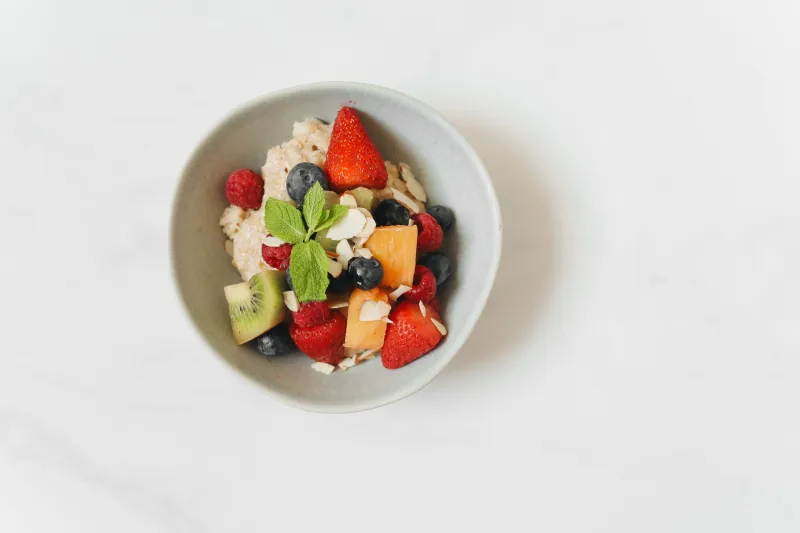
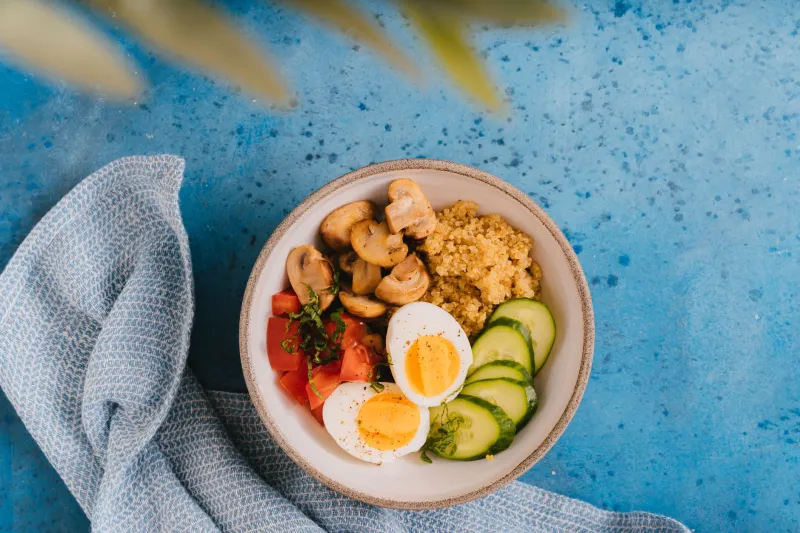
- Base: Quinoa or steel-cut oats (complex carbs, fiber)
- Protein: Two soft-boiled eggs or Greek yogurt (20+ grams)
- Fat: Sliced avocado or a tablespoon of almond butter
- Extras: Blueberries, a handful of spinach, pumpkin seeds
- Skip: Heavy sauces, refined sugars, or anything that will spike and crash you before noon
This kind of bowl gives your brain the glucose it needs to fire on all cylinders while keeping cortisol from pushing blood sugar into problematic territory.
Midday: Peak Metabolic Performance
Around midday, your metabolic machinery is running at its most efficient. Insulin sensitivity is at its daily high, digestive enzyme output is strong, and your body is primed to handle a more substantial nutrient load. This is the window where you can go bigger — more complex carbs, a full protein serving, and a broader variety of vegetables.
If you train during the day, this is also when your pre- or post-workout bowl timing aligns most naturally with your circadian biology. You're not fighting your body's rhythms; you're riding them.
Midday Bowl Template:
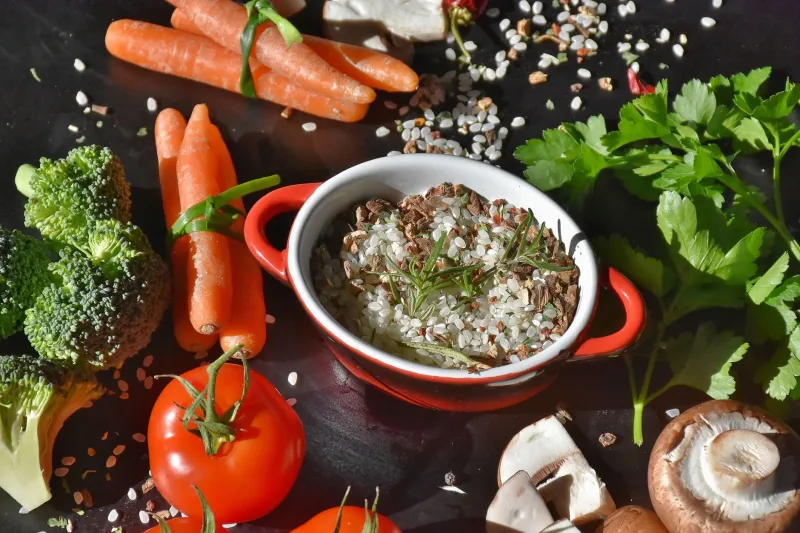
- Base: Brown rice, farro, or sweet potato (generous portion is fine here)
- Protein: Grilled chicken, salmon, or a full serving of lentils
- Fat: Olive oil-based dressing or tahini sauce
- Vegetables: Roasted broccoli, shredded carrots, cucumber, whatever's in season
- Extras: A squeeze of lemon for iron absorption, fresh herbs for micronutrient density
This is your power bowl window. Don't waste it on a sad desk salad.
Evening: Wind Down Your Metabolism, Not Just Your Mind
This is where most people's nutrition strategy goes sideways. Evening is the hardest time to resist big, carb-heavy meals — especially after a long day or a late workout. But your circadian biology is actively shifting gears by early evening. Insulin sensitivity drops. Melatonin begins its rise. Your digestive system is preparing to slow down.
A large bowl of white rice and heavy sauces at 9pm isn't just a late meal — it's metabolic friction. Your body processes it less efficiently, it can interfere with sleep quality, and it may contribute to the kind of low-grade metabolic disruption that accumulates over time.
That doesn't mean skipping dinner or eating like a bird. It means shifting the composition of your evening bowl toward protein, fiber, and non-starchy vegetables, with carbohydrates playing a supporting role rather than starring.
Evening Bowl Template:
- Base: Cauliflower rice, mixed greens, or a small portion of legumes
- Protein: Baked salmon, turkey meatballs, or tofu (keep it moderate — 25-30g)
- Fat: A drizzle of olive oil or a few slices of avocado
- Vegetables: Leafy greens, roasted zucchini, tomatoes, cucumber
- Extras: Fermented foods like kimchi or sauerkraut to support overnight gut activity
- Skip: Big grain bases, sweet sauces, anything that requires serious digestive heavy lifting
Bonus: tryptophan-rich proteins like turkey and a small amount of complex carbs can actually support melatonin production and improve sleep quality — a sneaky recovery win.
The Workout Timing Wrinkle
If you train early in the morning or late at night, you're not stuck. Circadian nutrition doesn't require you to overhaul your schedule — it just means being strategic about what you eat around your training relative to the time of day.
Early morning trainer? Keep your pre-workout bowl light and protein-forward, and save the carb reload for your midday bowl when your body can actually use it. Late-night lifter? A small, protein-centered recovery bowl after an evening session is smart — just keep the carb load minimal and the portion sensible. Your muscles still need amino acids; your metabolic clock just doesn't need the extra glucose work.
Start Small, Stay Consistent
You don't have to rebuild your entire eating life overnight. Start by auditing one meal — probably dinner, since that's where circadian misalignment is most common for most Americans. Swap a grain-heavy base for a vegetable base two or three nights a week. Notice how you sleep. Notice how you feel in the morning.
Then look at your breakfast bowl. Is it actually supporting your morning cortisol window, or are you loading up on refined carbs that are going to crash you by 10am?
Your internal clock is already running. The question is whether your bowls are running with it — or against it. Sync them up, and the results tend to speak for themselves.