When Your Healthy Bowls Start Feeling Like a Chore: A Real Fix for Mealtime Monotony

Photo by Photo by Toa Heftiba on Unsplash on Unsplash
Somewhere around week three or four, it happens. You open the fridge, see the prepped quinoa and the grilled chicken and the roasted veggies, and instead of feeling good about your choices, you feel... nothing. Or worse—mild dread. The bowl that felt exciting and intentional when you started has quietly become just another thing to get through.
This is bowl fatigue. And if you've ever quietly abandoned a healthy eating streak not because life got too busy, but because the food stopped feeling worth it, you already know exactly what I'm talking about.
Here's what I want to push back on: the standard advice to "just try new recipes" fundamentally misunderstands the problem. Bowl burnout isn't really about running out of recipes. It's about something deeper—the way our brains and bodies respond to repetition, and what happens when food stops being an experience and becomes a transaction.
The Psychology Behind Why Healthy Eating Gets Boring
Humans are wired for novelty. It's not a character flaw or a lack of discipline—it's neuroscience. The reward circuits in your brain respond strongly to new stimuli and gradually less to familiar ones. This is called hedonic adaptation, and it applies to food just as much as it applies to anything else in your life.
When you start a new eating routine, there's genuine excitement. You're making intentional choices, the flavors feel fresh, and the whole thing carries a sense of purpose. But as the routine solidifies, the novelty fades. The bowl becomes background noise. And once food loses its sensory appeal, willpower becomes the only thing keeping you at the table—which is an exhausting and ultimately unsustainable position to be in.
The goal, then, isn't to eat the same thing with more discipline. It's to strategically reintroduce novelty in ways that keep your brain engaged without blowing up the nutritional structure you've built.
Sensory Monotony Is a Bigger Issue Than Flavor Monotony
Most people, when they try to fix bowl boredom, go straight for new sauces or different spice blends. And while that helps, it's treating a symptom rather than the cause. What actually makes a meal feel repetitive is often texture and temperature, not just taste.
Think about it: if every bowl you eat is warm, soft, and chewy, your mouth is essentially getting the same sensory experience regardless of what the flavors are. Over time, that sameness becomes numbing.
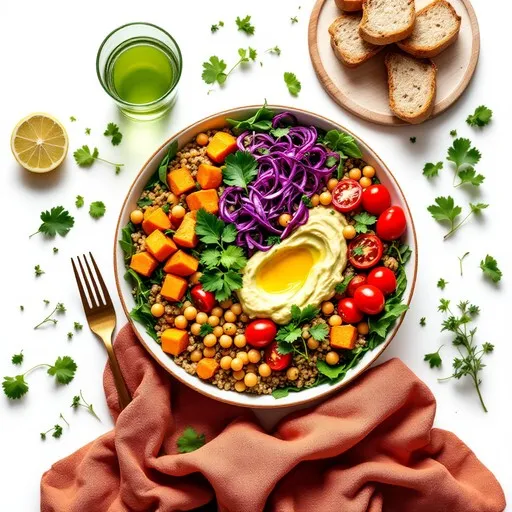
The fix: Deliberately engineer contrast into every bowl you build. Pair something creamy (avocado, tahini dressing, soft-boiled egg) with something crunchy (toasted chickpeas, sunflower seeds, shredded raw cabbage). Add something cold to a warm base—a scoop of cold Greek yogurt on a warm grain bowl, or chilled cucumber slices alongside roasted sweet potato. These contrasts wake up your senses and make the meal feel like an event rather than a routine.
Stop Rotating Recipes. Start Rotating Elements.
Here's a mindset shift that genuinely changes things: instead of thinking in terms of "different bowls," think in terms of interchangeable components. Build a mental library of bases, proteins, vegetables, toppings, and sauces—and mix and match them freely.
This approach works for two reasons. First, it reduces decision fatigue while still generating variety. Second, it keeps your nutritional foundation stable while the experience of eating stays fresh.
For example:
- Bases: brown rice, farro, cauliflower rice, soba noodles, mixed greens, roasted sweet potato chunks
- Proteins: grilled chicken, hard-boiled eggs, edamame, canned salmon, white beans, crispy tofu
- Crunch: toasted pepitas, crushed tortilla chips (yes, really), shaved radish, jicama sticks
- Sauce: miso-ginger vinaigrette, green goddess, chipotle yogurt, sesame-lime
Six bases × four proteins × five crunch options × four sauces = 480 theoretical combinations. You are not actually out of ideas. You just need a better system.
Seasonal Pivots Are Your Secret Weapon
One of the most underused strategies for keeping bowls interesting is simply following the seasons. American grocery stores make it easy to eat the same vegetables year-round, which sounds convenient but is actually a trap. When you eat strawberries in January and butternut squash in July, you lose the anticipation that makes seasonal produce feel special.
In winter, lean into roasted root vegetables, warming grains like farro and barley, and hearty greens like kale and radicchio. Spring and summer are made for raw or lightly dressed bowls—cucumber, corn, fresh herbs, ripe tomatoes, peaches. Fall is peak season for squash, apples, and earthy flavors like miso and tahini.
When your bowl reflects what's actually growing right now, it naturally feels more alive. And because you can only have certain things for a few months, the anticipation alone makes them taste better.
Unexpected Flavor Pairings That Actually Work
Sometimes the antidote to boredom is just a little culinary audacity. A few combinations that sound weird but are genuinely delicious in a bowl context:
- Mango + black beans + jalapeño + lime: tropical heat that works beautifully over brown rice or quinoa
- Roasted beets + orange segments + goat cheese + pistachios: sweet, tangy, creamy, crunchy—all four in one bowl
- Kimchi + fried egg + avocado + sesame: funky, rich, and deeply satisfying, with probiotics as a bonus
- Watermelon + feta + mint + arugula: sounds like a summer salad, works as a light grain bowl base in July
- Peanut butter sauce + shredded chicken + cucumber + rice noodles: think deconstructed satay, and it's incredibly easy to prep
None of these require special skills or hard-to-find ingredients. They just require a willingness to step slightly outside the familiar.
Give Yourself Permission to Eat for Pleasure—On Purpose
This might be the most important thing I can say: if your healthy eating plan has no room for genuine enjoyment, it will eventually collapse. Not because you're weak, but because enjoyment is a legitimate nutritional need in the psychological sense.
Building a bowl you actually want to eat is not a compromise. It's the whole point. Nutritional integrity and sensory pleasure are not opposites—they're partners. The most sustainable eating pattern you can build is one where the food is both good for you and genuinely good.
So if your rotation is feeling stale, don't white-knuckle through it. Redesign it. Lean into contrast, embrace the season, get weird with a flavor pairing, and remember that a bowl you look forward to is always going to serve you better than a perfect bowl you dread.