Who's Really Running Your Cravings? The Gut Bacteria Behind Every Bowl Decision You Make
Here's a humbling thought: somewhere between 70 and 100 trillion microorganisms are living in your gut right now, and a significant number of them have opinions about what you should eat for lunch. Not metaphorical opinions, either. These bacteria produce neurotransmitters, signal your hunger hormones, and generate metabolites that directly influence how much energy you can pull from a workout — or how badly you crash by 3 p.m.
Your trainer can program your lifts. Your dietitian can map your macros. But your microbiome? It's quietly running the background process that determines whether any of that advice actually lands.
Let's talk about what's really in your bowl — and who it's feeding.
Your Gut Is Not a Passive Bystander
For a long time, the gut was treated like a one-way system. Food goes in, nutrients come out. Simple. But the science has moved well past that model. We now know the gut microbiome functions more like a second metabolism — one that ferments certain fibers, produces short-chain fatty acids (SCFAs), synthesizes B vitamins, and communicates directly with your brain through what researchers call the gut-brain axis.
For fitness-focused eaters, this matters in very concrete ways. SCFAs like butyrate and propionate, which gut bacteria produce when they ferment fiber, do a lot of the heavy lifting when it comes to muscle recovery, inflammation management, and blood sugar regulation. A microbiome that's well-fed and diverse produces more of these compounds. A microbiome that's been starved of fiber and variety produces fewer — and you feel that deficit in your energy levels, your mood, and your ability to push through a hard training block.
So what does this mean for your bowl? It means the ingredients you choose aren't just feeding you. They're feeding the ecosystem that determines how well you perform.
True Prebiotics vs. the Gut-Health Hype Machine
The word "probiotic" has been stamped onto everything from granola bars to sparkling water, and "gut health" has become a catch-all marketing phrase that's largely lost its meaning. So let's cut through it.
Prebiotics are specific types of dietary fiber that selectively feed beneficial gut bacteria — particularly strains like Bifidobacterium and Lactobacillus, which are associated with reduced inflammation, better mood regulation, and stronger immune function. Not all fiber qualifies. The distinction matters.
Genuinely prebiotic bowl ingredients include:
- Garlic and onion — Rich in fructooligosaccharides (FOS), one of the most well-studied prebiotic compounds. Even cooked garlic retains meaningful prebiotic activity.
- Jerusalem artichokes and chicory root — Extremely high in inulin, a long-chain prebiotic fiber. A small amount goes a long way (start slow if your gut isn't used to it).
- Green bananas and slightly underripe plantains — High in resistant starch, which escapes digestion in the small intestine and becomes fuel for colonic bacteria.
- Cooked-and-cooled rice or potatoes — This one surprises people. Cooling these starches after cooking increases their resistant starch content significantly. Cold grain bowls aren't just trendy — they're functionally different from their hot counterparts.
- Legumes — Black beans, lentils, chickpeas. These are prebiotic powerhouses and among the most affordable ingredients you'll find at any US grocery store.
On the other side of the ledger, be skeptical of products marketed as gut-friendly that don't contain actual fiber or live cultures. Kombucha can be beneficial in small amounts, but the sugar content in many commercial versions partly offsets the benefit. "Gut health" flavored yogurts with added sugar feed less desirable bacterial strains just as readily as beneficial ones.
The Diversity Principle: Why Your Bowl Shouldn't Eat the Same Thing Every Week
One of the most consistent findings in microbiome research is that dietary diversity correlates strongly with microbial diversity — and microbial diversity is associated with better metabolic health, more stable energy, and lower systemic inflammation.
The practical implication? Rotating your bowl ingredients matters as much as choosing the right ones. If you eat the same grain bowl every day — even a nutritionally solid one — you're selectively feeding a narrower range of bacterial strains. Over time, less-fed strains can decline in population, and with them, some of the metabolic benefits they provide.
A simple rule: aim for at least 30 different plant foods across a week. That sounds like a lot, but it adds up faster than you'd think once you count herbs, spices, seeds, and the variety within vegetable categories. Swapping brown rice for farro on Tuesday, adding a tablespoon of hemp seeds, or tossing in some roasted fennel alongside your usual greens all count.
Building the Microbiome-Forward Bowl
You don't need to redesign your entire approach to eating. A few targeted additions can meaningfully shift the microbial environment your bowl creates.
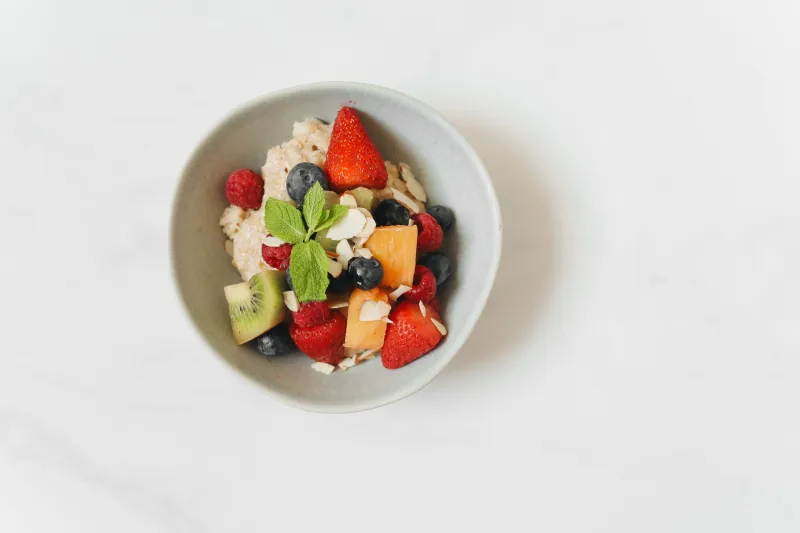
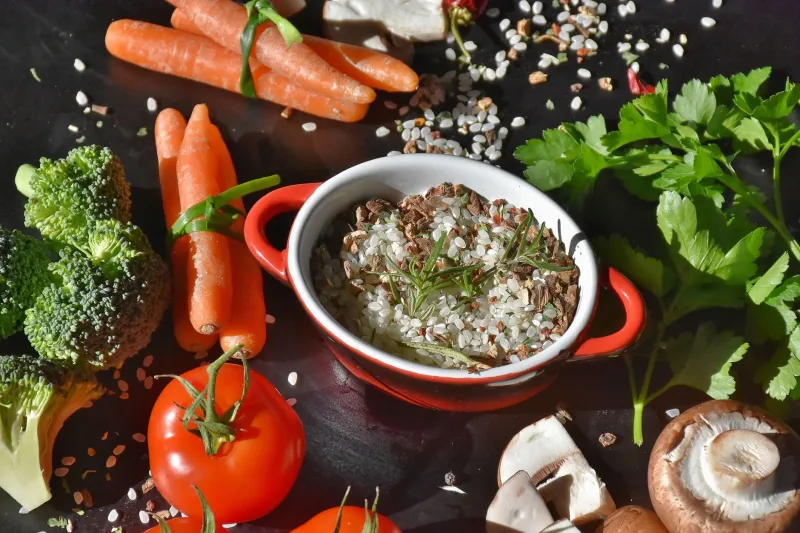
Base layer: Cooked-and-cooled grains (brown rice, farro, barley) for resistant starch. If you're doing hot prep, add a cooked legume to compensate.
Fiber diversity: Include at least two different vegetable types — one cruciferous (broccoli, cabbage, Brussels sprouts contain compounds that feed specific beneficial strains) and one allium (garlic, onion, leeks).
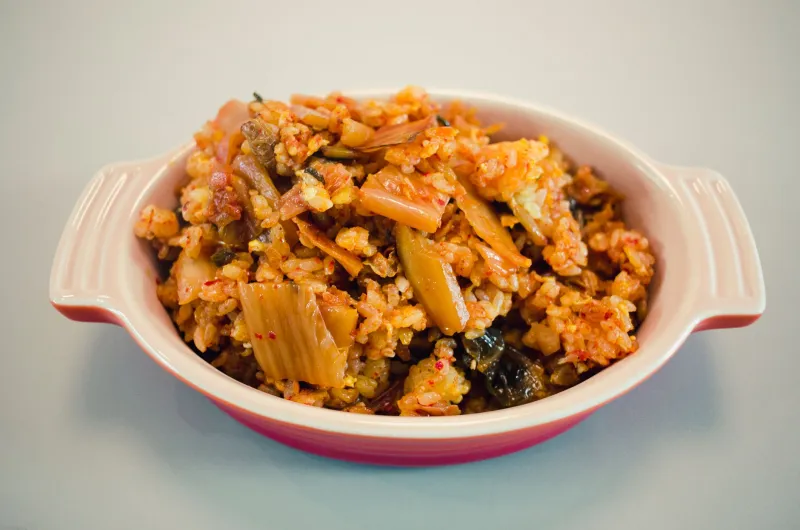
Fermented add-on: A small serving of kimchi, sauerkraut, or plain kefir alongside your bowl introduces live cultures that interact with the prebiotic fibers you've already included. Think of the prebiotics as setting the table; the probiotics are the guests.
Polyphenol boost: Blueberries, pomegranate seeds, dark leafy greens, and even dark chocolate (in reasonable amounts) contain polyphenols that gut bacteria convert into anti-inflammatory compounds. These aren't fiber, but they feed specific strains associated with reduced oxidative stress after training.
Fat source matters: Olive oil has been shown to support beneficial bacterial populations in ways that other oils haven't demonstrated as clearly. A drizzle over your finished bowl isn't just flavor — it's functional.
What Your Microbiome Is Trying to Tell You
Cravings, energy crashes, and mood dips between meals aren't always willpower failures. Sometimes they're microbial signals. Certain bacterial strains produce compounds that influence dopamine and serotonin pathways, which means a disrupted microbiome can contribute to the kind of low-grade mood flatness that makes sticking to a training plan feel harder than it should.
If your current eating pattern involves a lot of processed food, limited plant variety, or frequent antibiotic use, your microbiome may be working against your fitness goals rather than with them. The good news is that the microbiome is remarkably responsive to dietary change — research shows measurable shifts in bacterial populations within 48 to 72 hours of changing what you eat.
You don't have to overhaul everything at once. Start with one bowl a day that's built with microbial diversity in mind. Add the garlic. Cool your grains. Throw in the kimchi. Let the ecosystem catch up.
Your trainer can write the program. Your gut bacteria will decide how well you execute it.