You're Eating Variety, But Are You Getting It? The Nutrient Overlap Problem in Your Bowl
The Illusion of a Balanced Bowl
There's a bowl that shows up everywhere on meal prep feeds: quinoa base, roasted chickpeas, shredded kale, sliced avocado, pumpkin seeds, and a tahini drizzle. It looks complete. It photographs beautifully. And honestly, it is nutritious — by almost any standard.
But here's the thing nobody's talking about: that bowl is doing a lot of the same work twice. And while it's busy doubling up on certain nutrients, it's quietly leaving others off the table entirely.
This is the bowl paradox. More ingredients don't automatically mean more nutritional coverage. Sometimes they just mean more of the same.
What "Nutritional Variety" Actually Means
When most people think about variety in a bowl, they're thinking visually — different colors, different textures, different food groups. And while that's a reasonable starting point, it doesn't map directly to nutrient diversity.
Take the bowl above. Quinoa, chickpeas, pumpkin seeds, and tahini are all solid protein sources. They also all deliver meaningful amounts of zinc and magnesium. Kale and avocado both contribute vitamin K. Avocado and tahini are both fat-forward. You're getting excellent coverage in a handful of categories — and almost none in others.
What's missing? Vitamin B12, for starters. Preformed vitamin A (not the beta-carotene kind your body has to convert). Vitamin D. Omega-3 fatty acids in meaningful quantities. Iodine. These aren't obscure nutrients — they're the ones that show up on blood panels and actually affect how you feel, recover, and perform.
The problem isn't that any individual ingredient is bad. It's that the bowl was built on vibes rather than coverage.
The Most Common Redundant Pairings
Let's get specific, because this is where things get genuinely useful.
Quinoa + chickpeas: Both are celebrated protein sources, and both deliver iron, magnesium, and folate in similar proportions. If you're using a full serving of each, you're essentially doubling your intake of those nutrients while using up ingredient real estate that could be doing different work.
Spinach + kale: Two leafy greens in the same bowl feels virtuous. But their micronutrient profiles overlap heavily — both are high in vitamin K, folate, and calcium. Swapping one for something like watercress (iodine, vitamin C), radicchio (different polyphenols), or even shredded purple cabbage (anthocyanins, gut-friendly compounds) gives you genuinely new coverage.
Avocado + olive oil dressing: Both are monounsaturated fat sources. Both contribute vitamin E. If you're using a full half-avocado and a generous drizzle of olive oil, you've used two ingredients to deliver roughly the same fat-soluble nutrient package. One of those slots could go to a fat source with a different profile — walnuts, for instance, which bring alpha-linolenic acid (an omega-3), or hemp seeds, which offer a more balanced omega-3 to omega-6 ratio.
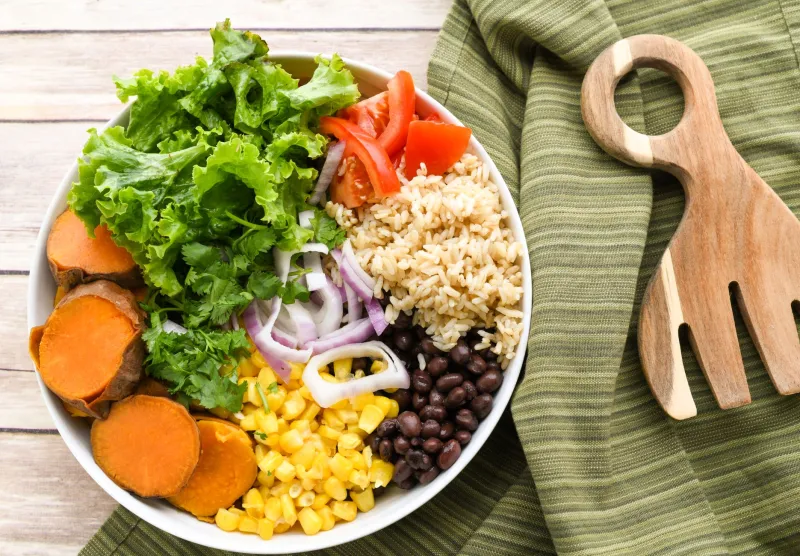
Brown rice + sweet potato: A grain and a starchy vegetable both showing up in the same bowl is a classic combo — and it tastes great — but nutritionally, you're leaning hard on complex carbohydrates and potassium twice over. If performance is the goal, that carb load might be intentional. If you're trying to cover your nutritional bases, one of those spots could go to a non-starchy vegetable with a completely different micronutrient signature.
How to Audit Your Own Bowl
You don't need a nutrition degree to do this. A rough audit takes about five minutes and can meaningfully change what your bowl is doing for you.
Start by listing every ingredient in your go-to bowl. Then, for each one, write down its top two or three nutritional contributions — not just macros, but the vitamins and minerals it's known for. You can use any reputable nutrition database like the USDA FoodData Central, which is free and comprehensive.
Once you've got the list, look for ingredients that share the same top contributions. Those are your redundancies. Then look at what's not on any ingredient's list. Those are your gaps.
Common gaps in otherwise solid bowls include:
- Vitamin B12 — only found in animal products or fortified foods
- Selenium — Brazil nuts are the easiest fix (literally one nut)
- Iodine — seaweed snacks, iodized salt, or dairy fill this quickly
- Vitamin D — almost impossible to get from food alone, but canned salmon or sardines make a real dent
- Choline — eggs are the most practical source; liver if you're adventurous
Building for Coverage, Not Just Color
The fix here isn't complicated — it just requires a small mental shift. Instead of asking "does this ingredient look good in my bowl?" ask "is this ingredient doing something no other ingredient in my bowl is doing?"
That might mean adding a small portion of canned salmon to your grain bowl instead of a second plant protein. It might mean swapping one leafy green for a fermented vegetable like kimchi, which brings probiotics and a completely different compound profile into the mix. It might mean tossing in a few Brazil nuts or a sprinkle of nutritional yeast (a surprisingly good B12 source for plant-based eaters).
None of this requires rebuilding your bowl from scratch. It's about being deliberate with the slots you have.
The Real Win
The most nutritionally effective bowls aren't the ones with the longest ingredient lists. They're the ones where every ingredient is earning its place by doing something the others aren't.
Variety for variety's sake is a feel-good strategy. Variety with intention is an actual nutrition strategy. Your bowl can look great and cover your bases — you just have to know what you're building toward.